



Therapeutic area
Ophthalmology
The eye is a complex organ made up of several systems: the ocular surface, lens, retina, optic nerve and ocular adnexa. Ophthalmology covers a range of conditions that can damage these structures, with major consequences for independence. Seeing, learning, working, interacting with others: eye health plays an essential role at every stage of life.
The World Health Organization estimates that at least 2.2 billion people have a near or distance vision impairment.
Eye diseases are a diverse group of conditions. While some, such as AMD, are common, others stand out for their rarity, their diagnostic or therapeutic complexity, and the need for highly specialised care.
Source: who.int
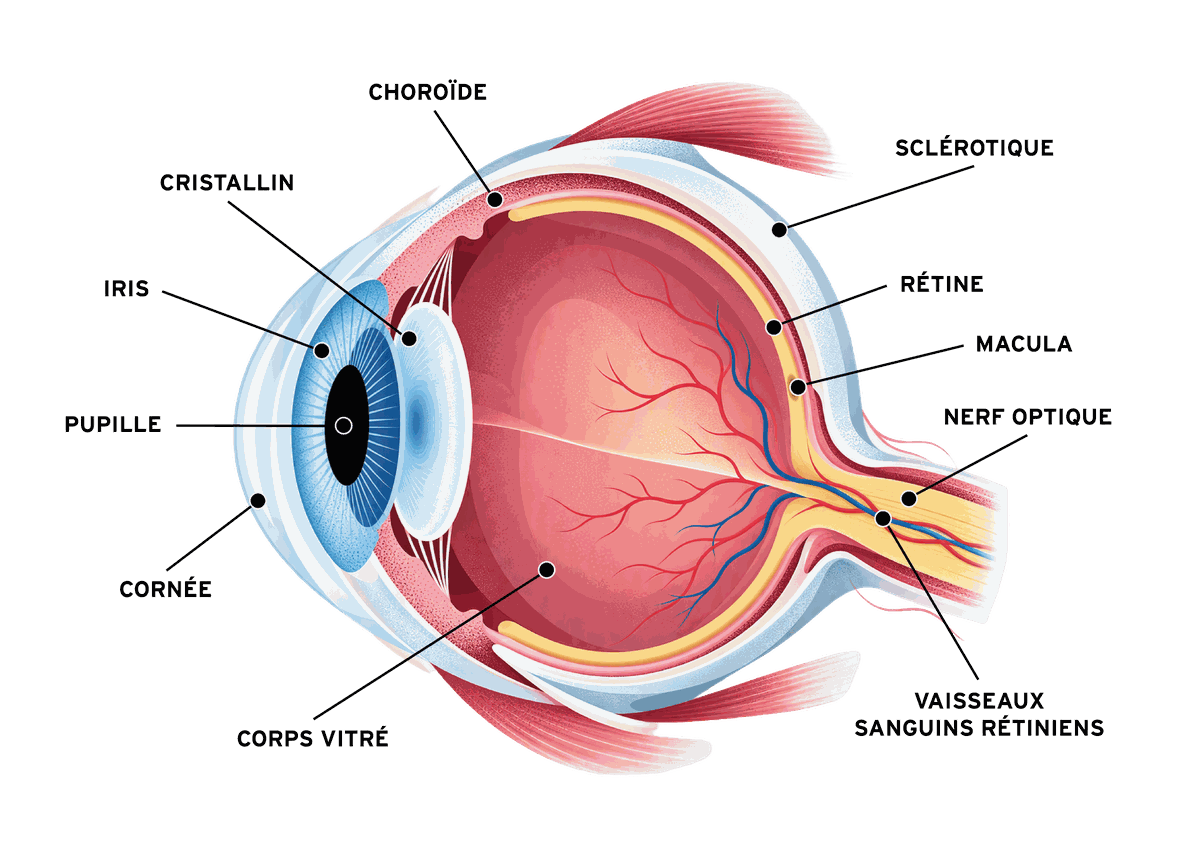
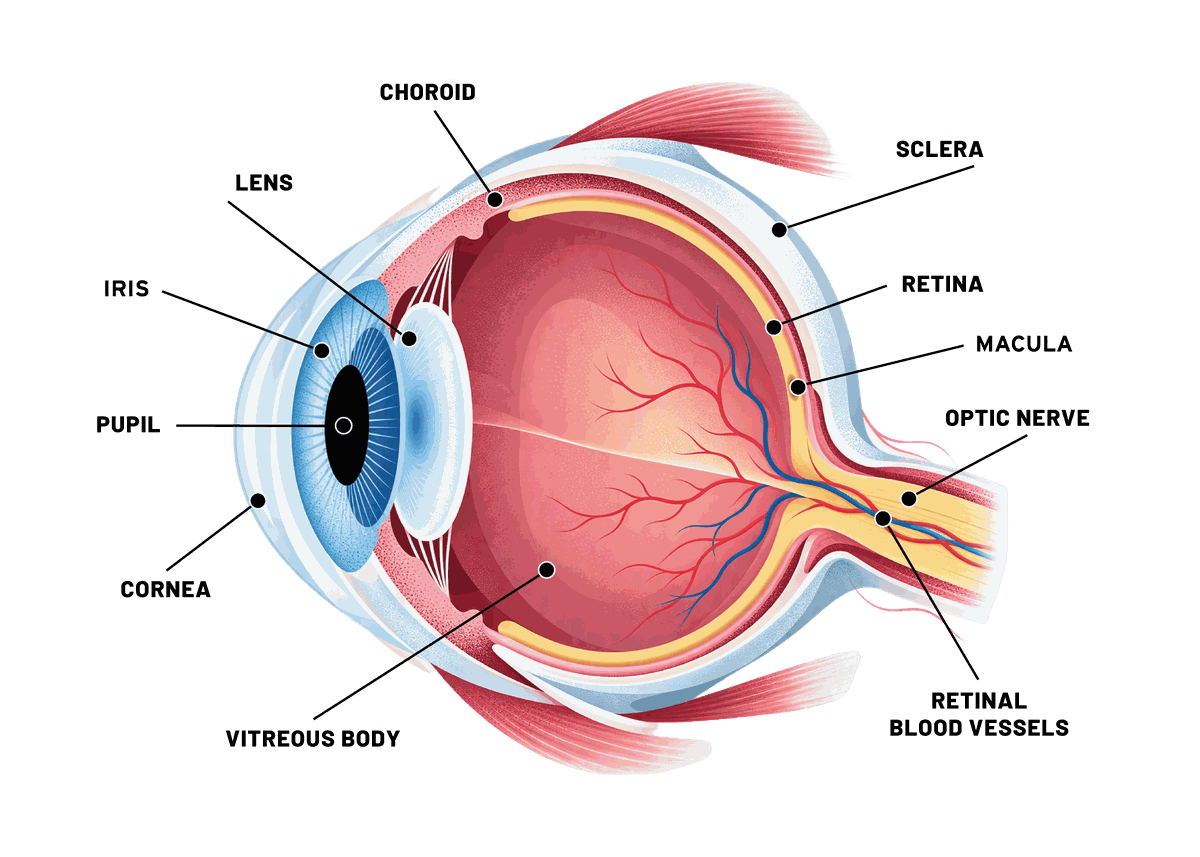
Anatomy of the eye
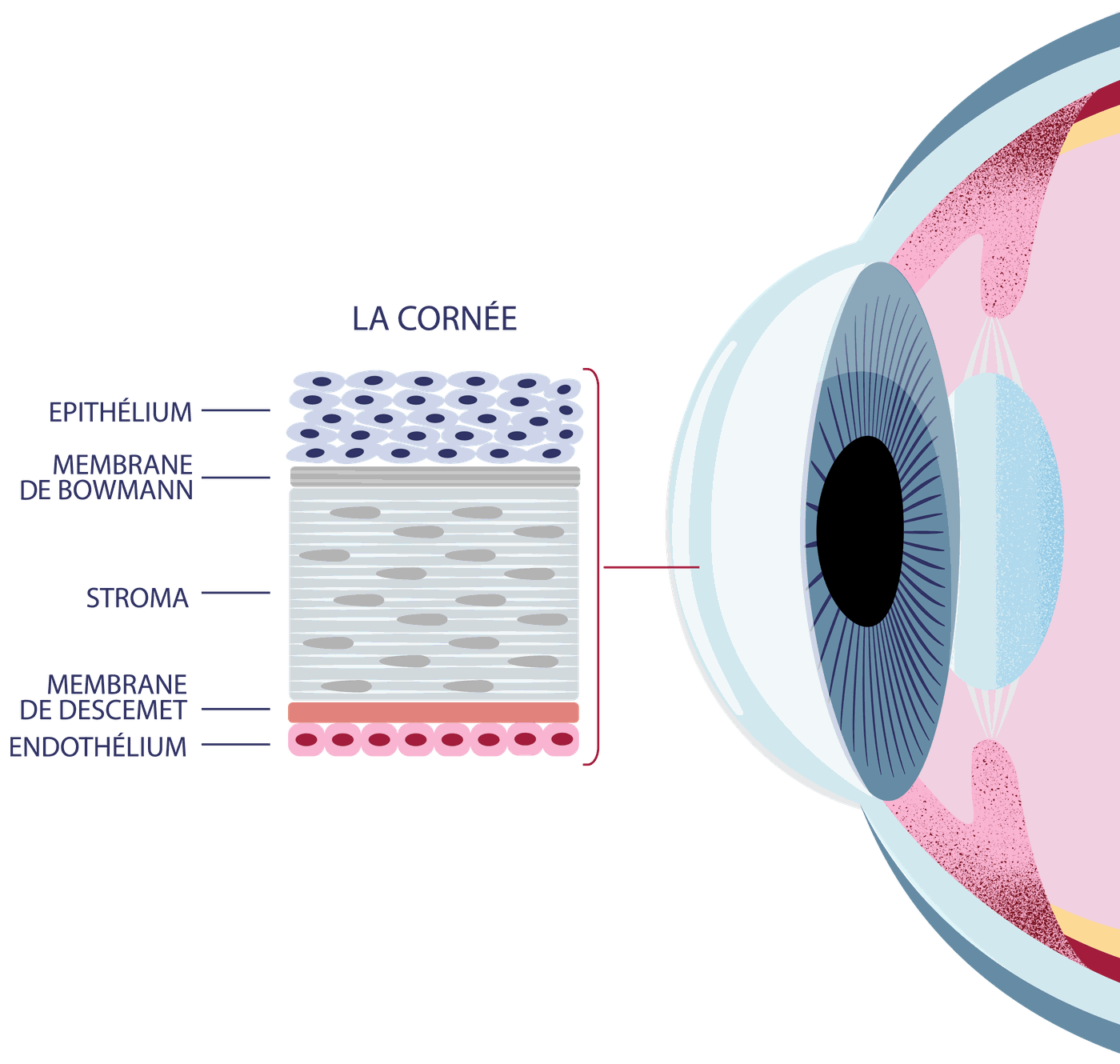
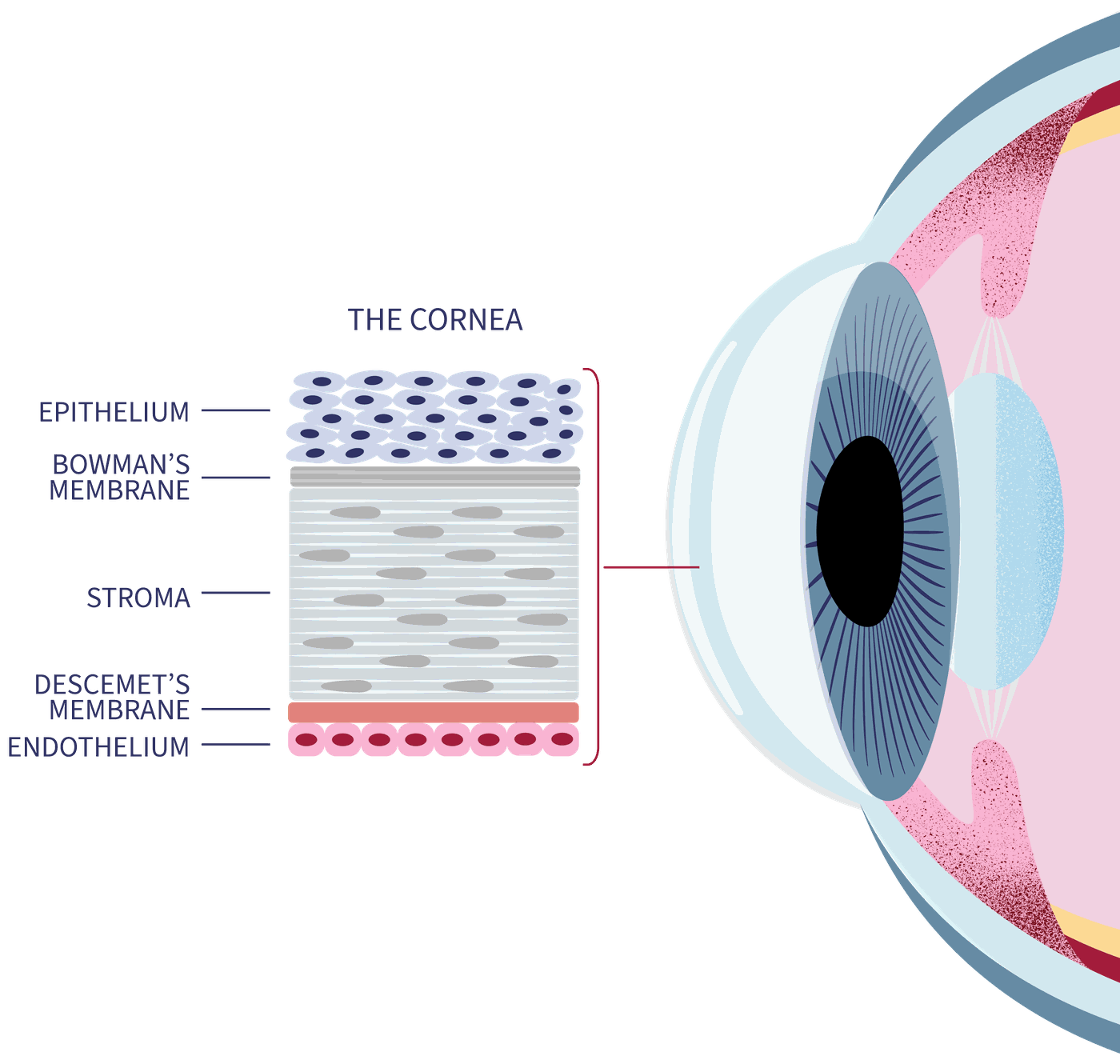
The cornea: a transparent structure essential to vision
The cornea is the transparent part at the front of the eye. Essential to vision, it plays two roles: a major optical role, letting light in and focusing it on the retina, and a role as a protective barrier against external damage. To fully perform these functions, it must remain transparent, regular and intact.
Some corneal diseases can lead to loss of transparency, chronic inflammation, pain, functional discomfort, reduced visual acuity and blindness. In their most severe forms, corneal diseases are a real therapeutic challenge and require in-depth expertise in this part of the eye.
Source: rams.agence-biomedecine.fr
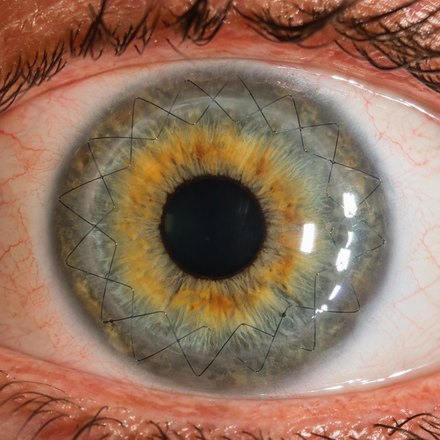
Corneal transplantation may be considered when the transparency or structure of the cornea is significantly impaired. It involves replacing all or part of the diseased cornea with healthy corneal tissue from a donor.
For example, the cornea is now the most transplanted tissue in France. More than 6,000 corneal transplants are performed each year, for around 12,000 patients eligible for transplantation. Many patients are still waiting for a corneal transplant. In this context, every graft is precious and preserving it is a major public health issue.
Some situations carry a particularly high risk of graft rejection or failure, notably corneal neovascularisation, a history of rejection, ocular surface inflammation or a specific immune context. These patients need specialist assessment and close follow-up to maximise the chances of a successful transplant.
Source: aao.org · eyewiki.org
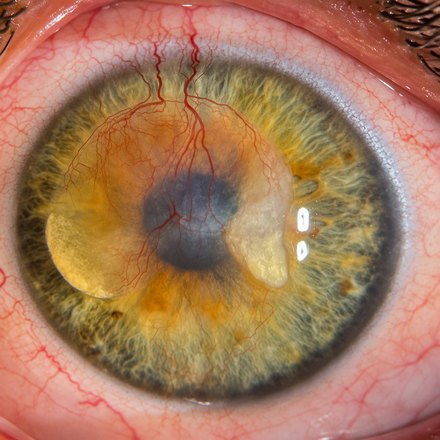
The cornea’s transparency relies on one essential feature: the absence of blood vessels. The cornea is said to be “avascular”.
Corneal neovascularisation is the abnormal growth of blood vessels into the cornea. It occurs when the natural mechanisms that prevent vessels from forming in the cornea can no longer counterbalance the signals that promote their growth.
It may be associated with inflammatory, infectious, traumatic, immunological or hypoxic conditions.
As it progresses, corneal neovascularisation can threaten corneal transparency, reduce visual acuity and increase the risk of rejection in transplant patients. In the most severe cases, it can lead to blindness.
Early and appropriate management helps limit these risks.
Source: TFOS DEWS III · pubmed.ncbi.nlm.nih.gov
Long under-assessed and overlooked, dry eye is now recognised as a multifactorial disease of the ocular surface. The international TFOS DEWS III consensus defines it as a disease in which loss of tear film homeostasis plays a central role, accompanied by ocular symptoms, tear film instability, hyperosmolarity, inflammation, ocular surface damage and, in some cases, neurosensory abnormalities.
Inflammatory or severe forms of dry eye can significantly affect quality of life: pain, visual discomfort, sensitivity to light, eye strain, and difficulty reading or using screens for long periods.
In these situations, the challenge is to better understand the inflammatory mechanisms involved, identify affected patients and promote appropriate care by healthcare professionals.

The retina: a tissue essential to visual perception
The retina is the neurosensory tissue at the back of the eye. It converts light signals into nerve signals, which the optic nerve carries to the brain to be decoded as visual information. Some retinal diseases impair central vision and the perception of detail, making it hard to read or recognise faces and limiting independence in daily life.
KÔL focuses in particular on retinal diseases in which vision loss can be rapid and progressive, disabling, and associated with significant medical needs.
Source: inserm.fr
Age-related macular degeneration, or AMD, is a multifactorial retinal disease affecting people over 50.
It involves deterioration of the macula, the central area of the retina, and can lead to progressive loss of central vision.
One of the leading causes of visual impairment in people over 50, AMD in all its forms is estimated to affect 195.6 million people worldwide. Its frequency rises sharply with age: around 1% of 50 to 55-year-olds, 10% of 65 to 75-year-olds and 25 to 30% of those over 75.
There are two main forms of the disease: neovascular, or “wet”, AMD and atrophic, or “dry/advanced”, AMD.
Source: maolya.chu-montpellier.fr
Stargardt disease is another genetic retinal disorder. Like AMD, it affects the macula, the central region of the retina, and causes a gradual loss of central vision. It usually appears in childhood, adolescence or young adulthood, but can sometimes emerge later. The first signs are generally difficulty reading, recognising faces or seeing fine detail.
It is a rare disease, yet it remains the most common inherited macular dystrophy. Its prevalence is estimated at between 1 in 20,000 and 1 in 30,000 people in the typical childhood form.
Research is under way into several therapies that could slow the progression of this disease.